What is Dysautonomia
Understanding Dysautonomia
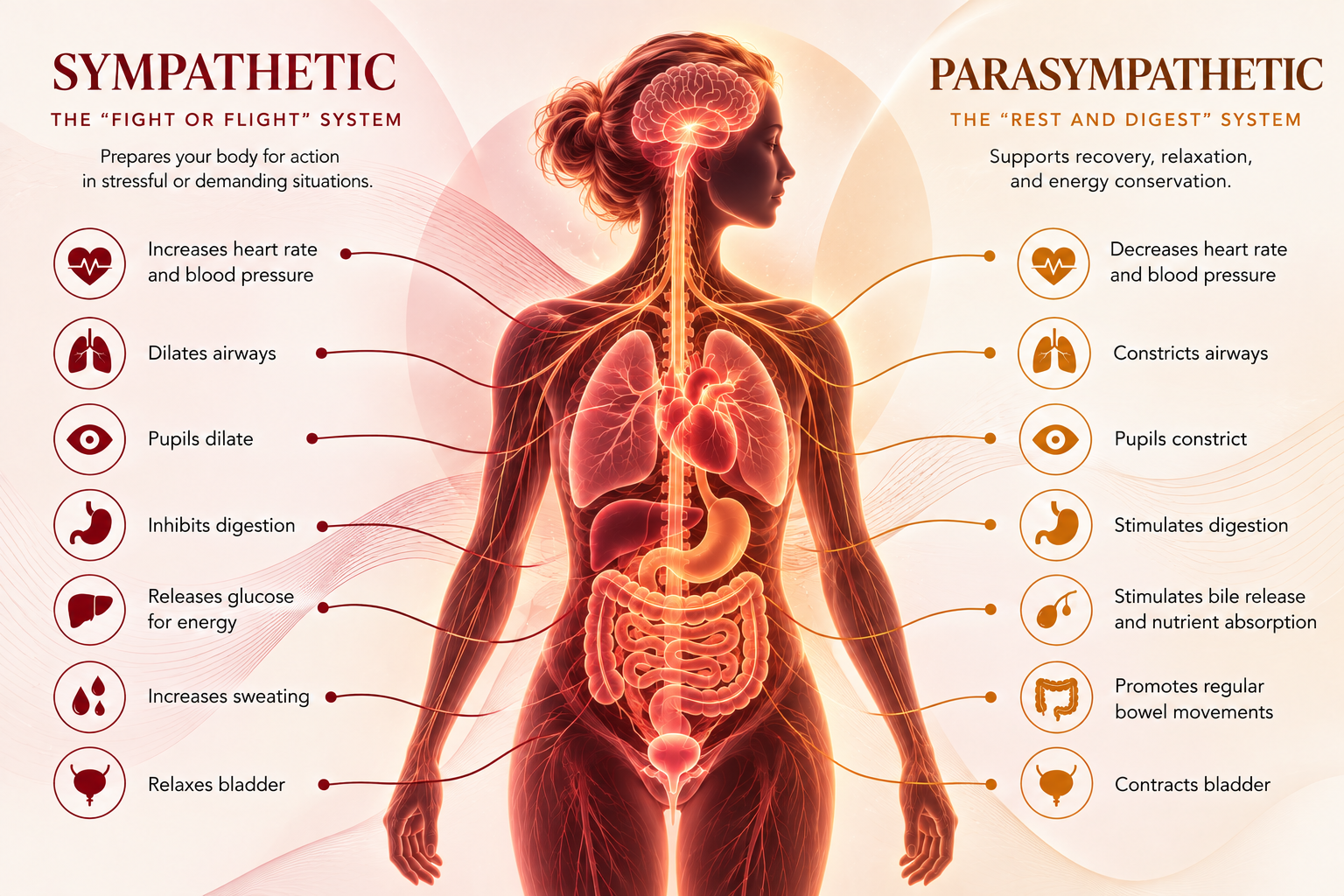
Dysautonomia is a term used to describe conditions that affect the autonomic nervous system that automatically controls functions such as heart rate, blood pressure, breathing, digestion, temperature regulation and circulation.
When the autonomic nervous system does not regulate these fuctions effectively, people may experience symptoms such as dizziness, lightheadedness, fatigue, rapid heart rate, exercise intolerance, brain fog, headaches, temperature sensitivity, and digestive changes. Symptoms can vary significantly from person to person and may fluctuate from day to day.
Conditions such as POTS (Postural Orthostatic Tachycardia Syndrome) and Orthostatic hypotension fall under the broader umbrella of dysautonomia. Understanding how the nervous system, cardiovascular system, and movement interact can help guide strategies to manage symptoms, gradually improve activity tolerance, and support participation in everyday life.
What is POTS?
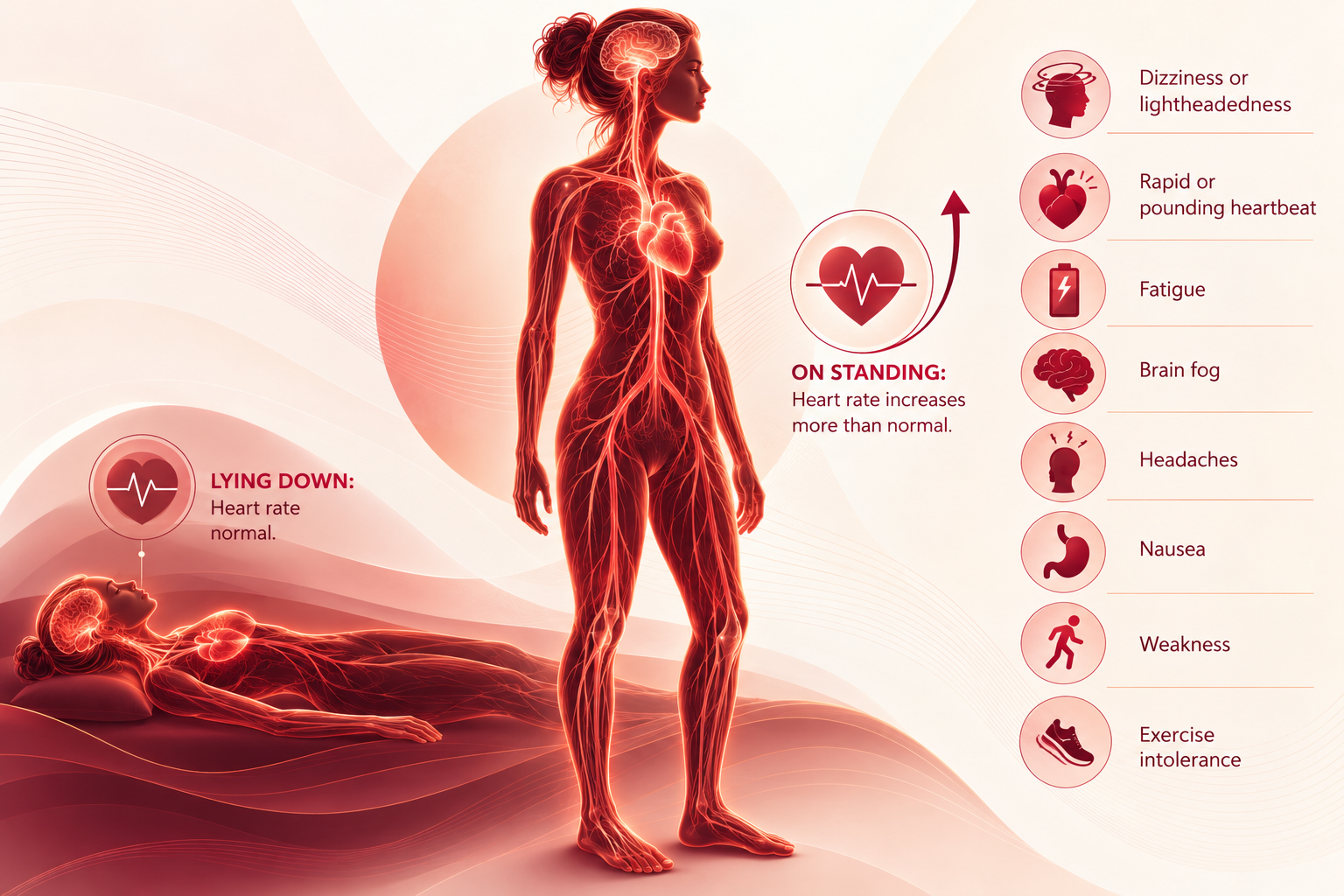
POTS stands for Postural Orthostatic Tachycardia Syndrome. It is a form of dysautonomia that affects how the autonomic nervous system regulates heart rate and blood flow when a person changes position, especially when moving from lying down to standing.
When someone with POTS stands, their heart rate increases more than expected as the body works to maintain blood flow to the brain and other organs. This can cause symptoms such as dizziness, lightheadedness, rapid or pounding heartbeat, fatigue, brain fog, weakness, headaches, nausea, and exercise intolerance. Symptoms and severity can vary significantly from person to person.
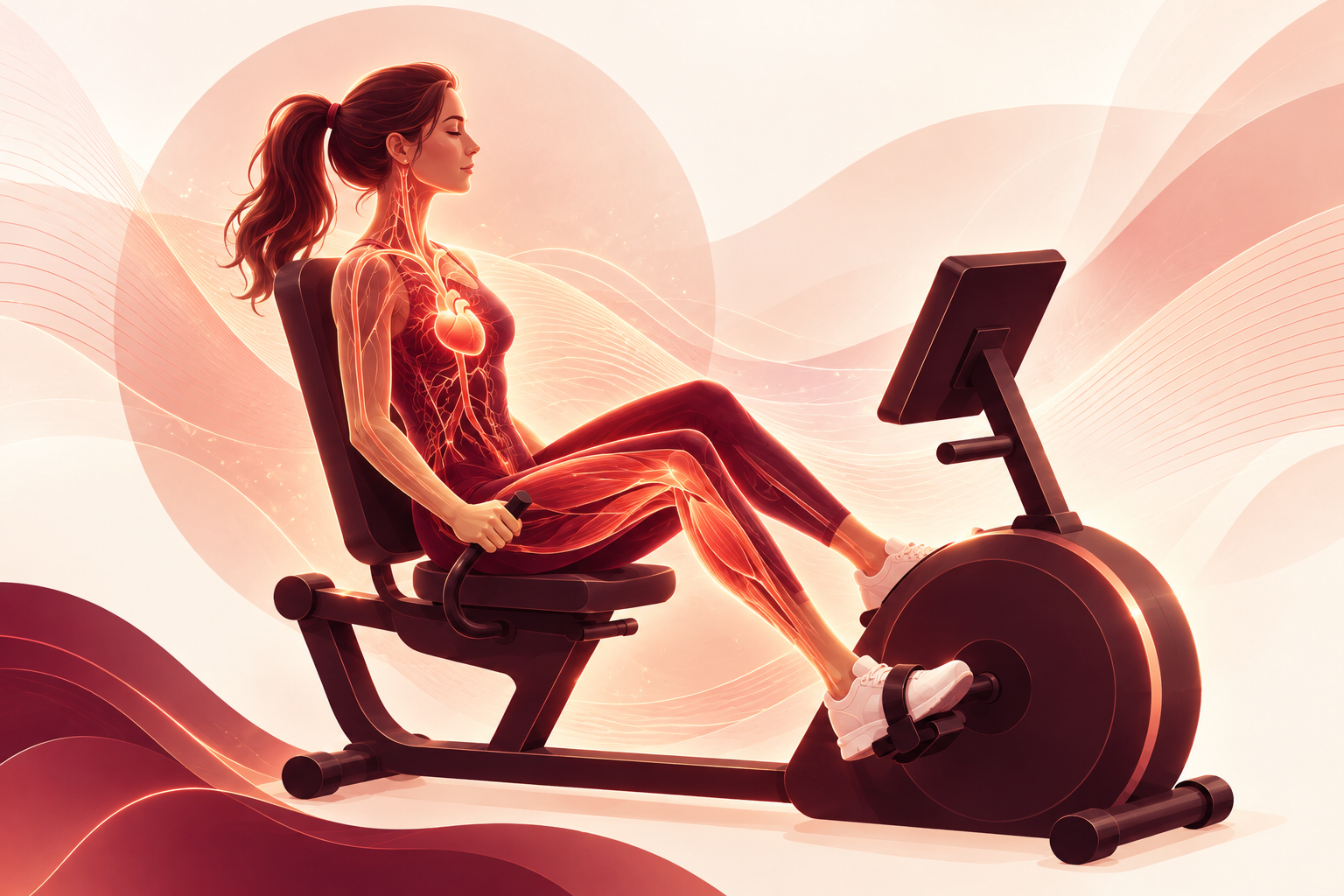
Physical therapy can be part of POTS management by using individualized, gradual exercise and activity progression, often beginning in positions that are better tolerated and progressing toward more upright activities as appropriate.
How Can Physical Therapy Help
Living with POTS can make everyday activities feel overwhelming, but the right physical therapy program can help you safely regain strength, endurance, and confidence. Because every person experiences POTS differently, treatment is individualized and progresses at a pace your body can tolerate.
Physical therapy may help by:
Improving exercise tolerance through a gradual, structured program.
Reducing dizziness and lightheadedness by helping your body better adapt to changes in position.
Building strength in the legs and core to improve circulation and support blood return to the heart.
Teaching breathing techniques and pacing strategies to better manage symptoms and prevent flare-ups.
Improving balance and reducing the risk of falls.
Addressing muscle weakness, joint pain, or hypermobility, which commonly occur alongside POTS.
Providing education on hydration, compression garments, activity modification, and energy conservation to make daily activities more manageable.
Guiding a safe return to work, school, exercise, and the activities you enjoy.
The goal of physical therapy is not simply to exercise more—it is to help retrain how your cardiovascular, nervous, and musculoskeletal systems work together. With a personalized plan and gradual progression, many people experience improved stamina, better symptom control, and a higher quality of life.