

Ehlers-DAnlos Syndrome
&
Hypermobile Spectrum Disorder
Understanding Ehlers-Danlos Syndromes & Hypermobility Spectrum Disorders

What Are Ehlers-Danlos Syndromes (EDS)?
Ehlers-Danlos syndromes (EDS) are a group of 13 inherited connective tissue disorders that affect collagen, resulting in joint hypermobility, tissue fragility, and symptoms that can involve multiple body systems. The most common subtype is hypermobile Ehlers-Danlos syndrome (hEDS), which is diagnosed using clinical criteria because there is currently no genetic test.
In the United States, it is estimated that approximately 1 in 3,100 people have hypermobile EDS (hEDS), though the true prevalence is likely higher due to underdiagnosis.
Symptoms vary from person to person but may include joint instability, chronic pain, fatigue, autonomic dysfunction, gastrointestinal concerns, and frequent injuries.
What Is Hypermobility Spectrum Disorder (HSD)?
Hypermobility Spectrum Disorder (HSD) is a connective tissue disorder characterized by symptomatic joint hypermobility. While many people are naturally flexible, hypermobility only becomes a disorder when it leads to pain, instability, repeated injuries, or functional limitations.
HSD is not a milder version of EDS. Individuals with HSD can experience symptoms that are just as impactful as those with hypermobile EDS. The diagnosis simply reflects that a person does not currently meet the specific diagnostic criteria for hEDS or another hereditary connective tissue disorder.
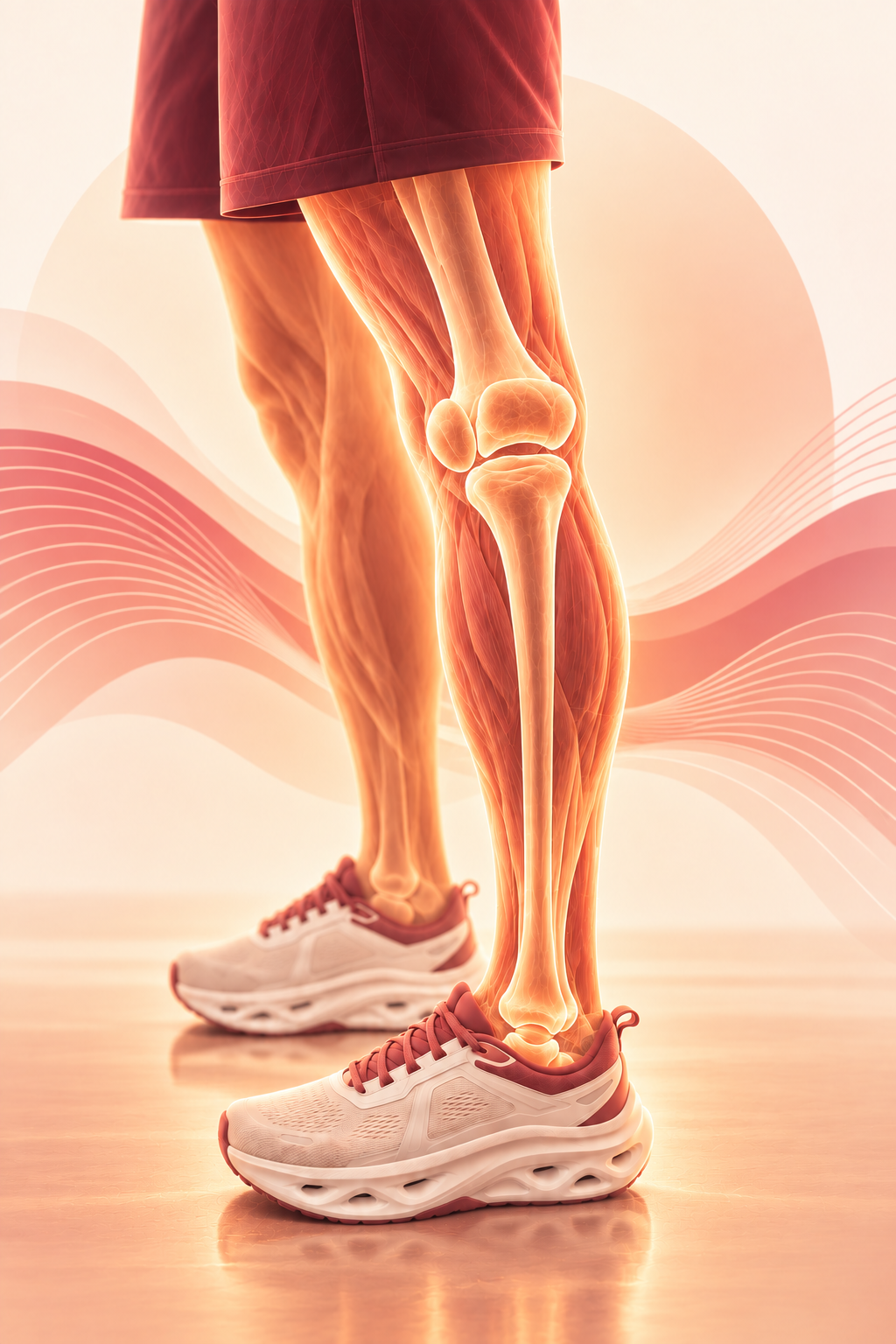
What is joint hypermobility
Joint hypermobility means a joint moves beyond the typical range of motion.
Many children and some adults are naturally flexible without experiencing any problems. This is referred to as asymptomatic joint hypermobility and does not require treatment.
People with joint hypermobility often experience:
Joint instability
Frequent sprains or strains
Partial or complete joint dislocations
Chronic musculoskeletal pain
Muscle fatigue
Poor balance or coordination
Headaches
Gastrointestinal symptoms
Dizziness or autonomic dysfunction
Exercise intolerance
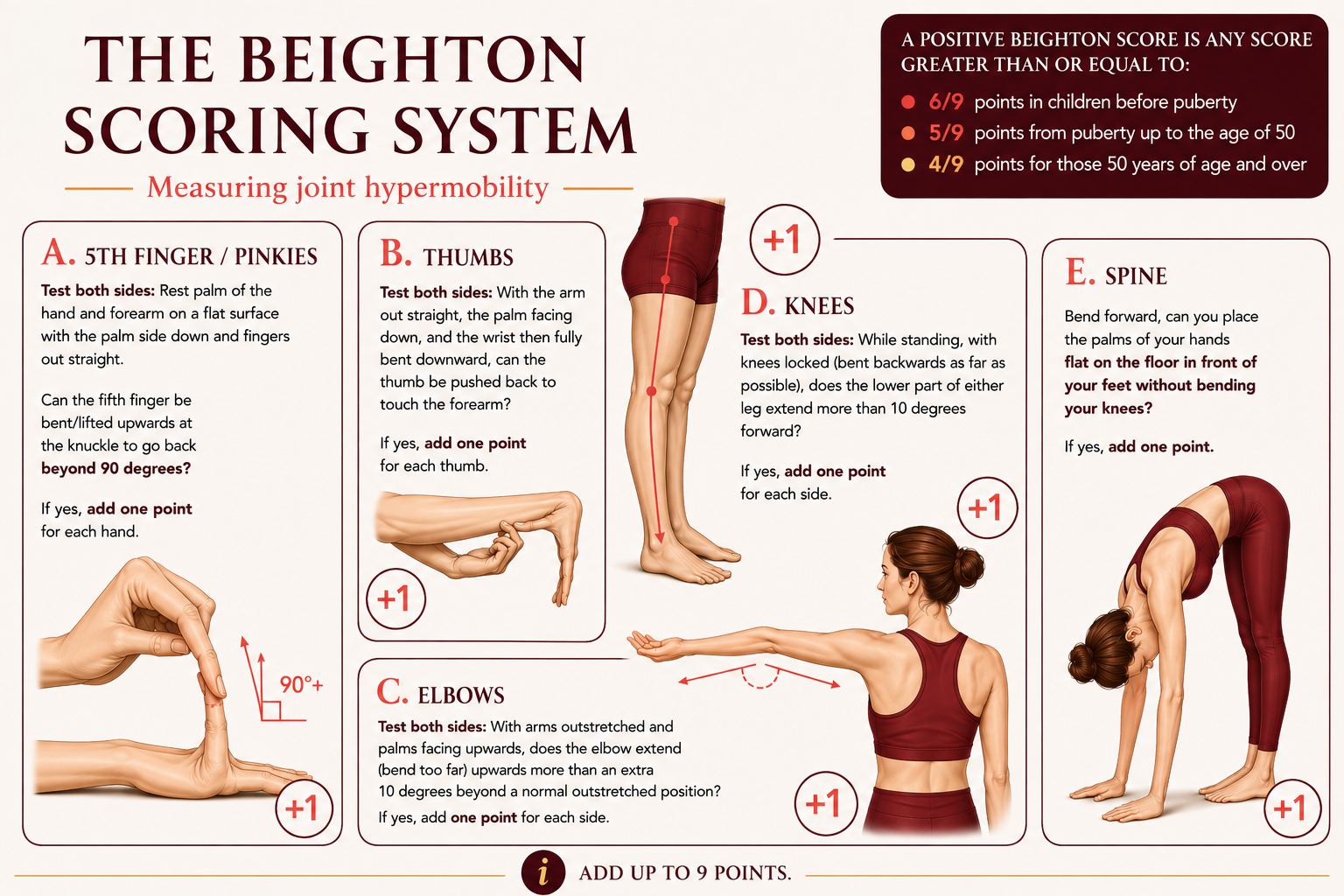
Assessing Joint Hypermobility
Beighton Score
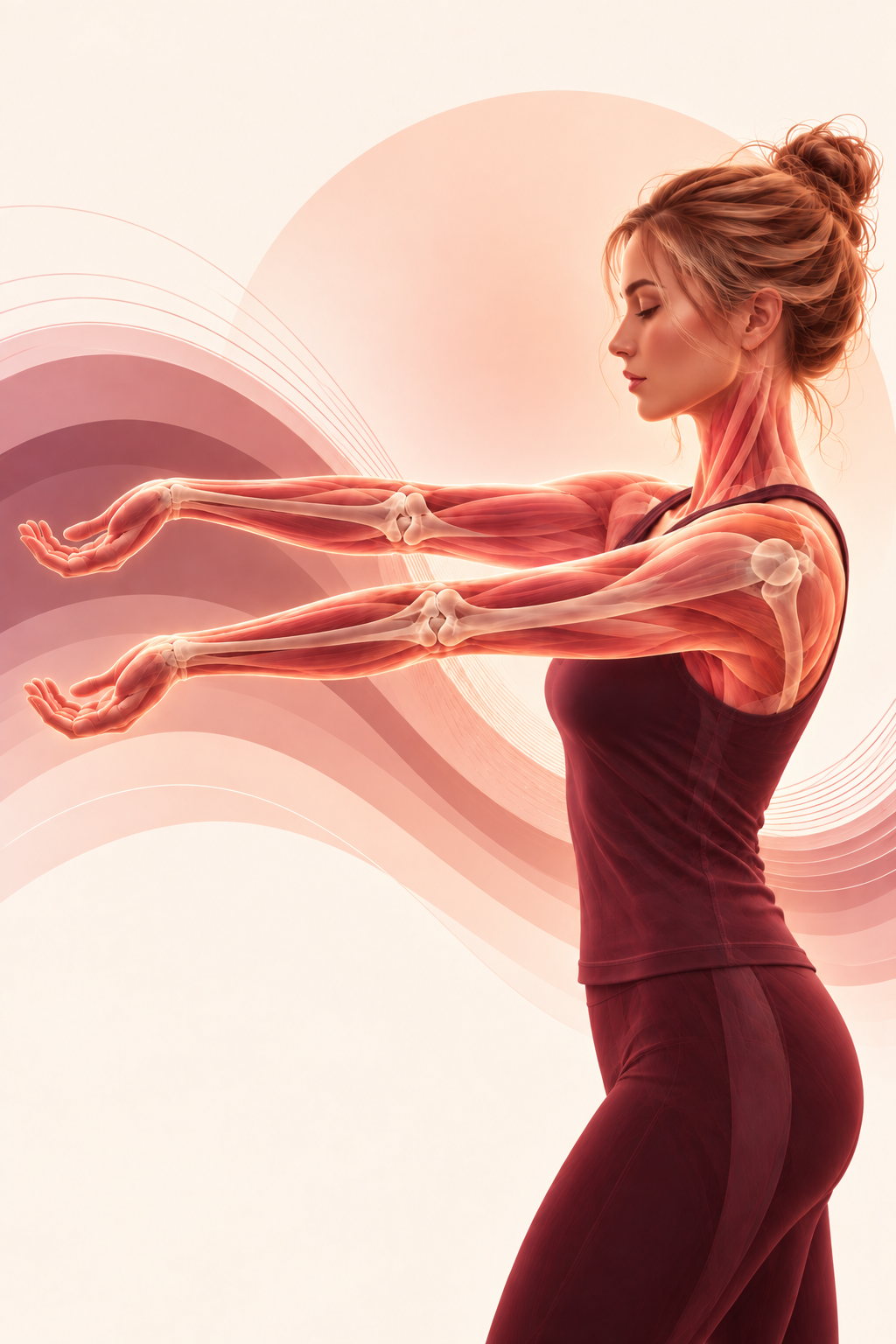
How can physical therapy Help
Physical therapy can help people with Ehlers-Danlos Syndrome (EDS) and Hypermobile Spectrum Disorder (HSD) move with less pain, improve joint stability, and feel more confident in their daily activities. Because the body's connective tissue is more flexible than normal, the muscles have to work harder to support the joints. Through personalized, one-on-one care, we strengthen the right muscles, improve balance and coordination, reduce injuries, and teach your body to move more efficiently—all while keeping any other health conditions, such as dysautonomia, chronic pain, or previous injuries, in mind. The goal isn't to change the connective tissue—it's to help you feel stronger, move better, and get back to doing the things you enjoy with greater confidence.